AI Website Analytics
by Admin
Posted on 28-10-2025 05:19 PM
What is AI Website Analytics
AI website analytics refers to the use of Artificial Intelligence and Machine Learning algorithms to analyze and interpret website data. These algorithms can automatically identify patterns, trends, and correlations in website data, providing insights that would be difficult or impossible to discover through manual analysis. AI website analytics tools can analyze a wide range of data, including website traffic, user behavior, conversion rates, and customer demographics.
Benefits of AI Website Analytics
The benefits of AI website analytics are numerous. One of the primary advantages is the ability to automatically identify areas of improvement on a website. AI algorithms can analyze website data to identify bottlenecks, such as slow-loading pages or confusing navigation, and provide recommendations for improvement. Additionally, AI website analytics tools can help businesses to better understand their customers, by analyzing their behavior and preferences. This can enable businesses to create more effective marketing campaigns and improve customer engagement.
How AI Website Analytics Works
AI website analytics tools use a variety of Machine Learning algorithms to analyze website data. These algorithms can be trained on large datasets, enabling them to learn patterns and relationships in the data. Once trained, the algorithms can be applied to new, unseen data, enabling them to make predictions and provide insights. For example, a Machine Learning algorithm might be trained on a dataset of website traffic, to predict the likelihood of a user converting (i.e. making a purchase or filling out a form).
Applications of AI Website Analytics
AI website analytics has a wide range of applications, including e-commerce, digital marketing, and customer service. For example, an e-commerce company might use AI website analytics to analyze customer behavior and preferences, and create personalized product recommendations. A digital marketing agency might use AI website analytics to analyze the effectiveness of their marketing campaigns, and optimize their targeting and ad spend. A customer service team might use AI website analytics to analyze customer feedback and sentiment, and identify areas for improvement.
Real-World Examples
There are many real-world examples of AI website analytics in action. For example, a large online retailer might use AI website analytics to analyze customer behavior and preferences, and create personalized product recommendations. A financial services company might use AI website analytics to analyze customer feedback and sentiment, and identify areas for improvement. A healthcare company might use AI website analytics to analyze patient engagement and outcomes, and optimize their treatment plans.
Limitations and Challenges
While AI website analytics has many benefits, there are also some limitations and challenges to consider. One of the primary challenges is the quality and accuracy of the data. AI algorithms are only as good as the data they are trained on, so it is essential to ensure that the data is accurate, complete, and relevant. Additionally, AI website analytics tools can be complex and require specialized skills and expertise to implement and interpret.
Overcoming the Limitations
To overcome the limitations and challenges of AI website analytics, businesses can take a number of steps. Firstly, they can ensure that their website data is accurate, complete, and relevant. This can involve implementing data validation and cleansing processes, and ensuring that data is collected and stored in a secure and compliant manner. Secondly, businesses can invest in training and development, to ensure that their teams have the skills and expertise needed to implement and interpret AI website analytics tools.
Future of AI Website Analytics
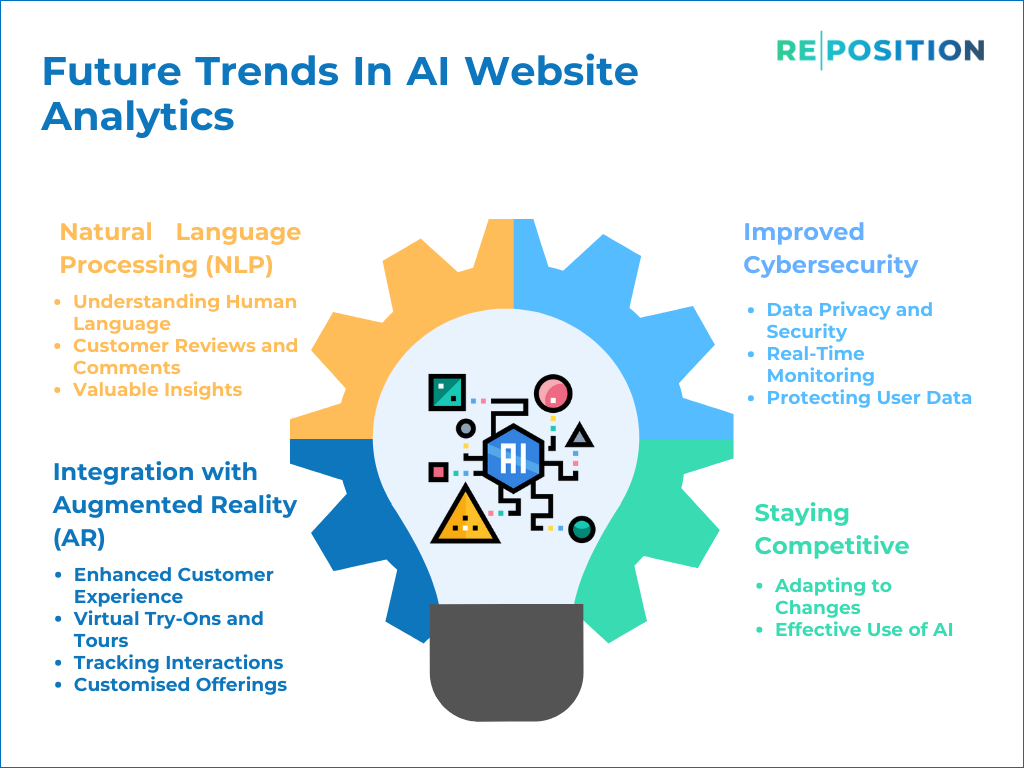
The future of AI Website Analytics is exciting and rapidly evolving. As AI and Machine Learning technologies continue to advance, we can expect to see even more sophisticated and powerful tools. These tools will be able to analyze even larger and more complex datasets, and provide even deeper and more actionable insights. Additionally, we can expect to see greater integration of analytics with other business systems and tools, such as customer relationship management (CRM) and marketing automation platforms.
Best Practices for Implementing AI Website Analytics
To get the most out of AI website analytics, businesses should follow a number of best practices. Firstly, they should ensure that their website data is accurate, complete, and relevant. Secondly, they should invest in training and development, to ensure that their teams have the skills and expertise needed to implement and interpret AI website analytics tools. Thirdly, they should start small, and gradually scale up their AI website analytics efforts over time. Finally, they should continuously monitor and evaluate their AI website analytics tools, to ensure that they are providing the desired insights and outcomes.
Conclusion
In conclusion, AI website analytics is a powerful and rapidly evolving field, with a wide range of benefits and applications. By leveraging AI and Machine Learning algorithms, businesses can automatically collect, analyze, and provide insights on website data, enabling them to make data-driven decisions quickly and efficiently. While there are some limitations and challenges to consider, these can be overcome by ensuring that website data is accurate, complete, and relevant, and by investing in training and development.
FAQs
What is AI website analytics?
AI website analytics refers to the use of Artificial Intelligence and Machine Learning algorithms to analyze and interpret website data.
What are the benefits of AI website analytics?
The benefits of AI website analytics include the ability to automatically identify areas of improvement on a website, and to better understand customer behavior and preferences.
How does AI website analytics work?
AI website analytics tools use Machine Learning algorithms to analyze website data, and provide insights and recommendations for improvement.
Can AI website analytics be used for e-commerce and digital marketing?
Yes, AI website analytics can be used for e-commerce and digital marketing, to analyze customer behavior and preferences, and optimize marketing campaigns and targeting.
Is AI website analytics complex and difficult to implement?
AI website analytics can be complex and require specialized skills and expertise to implement and interpret, but there are many tools and resources available to help businesses get started.